
Shopping Cart
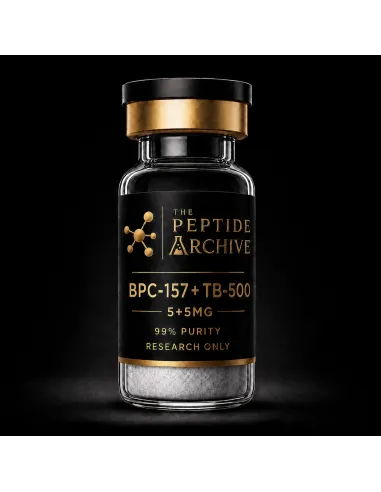

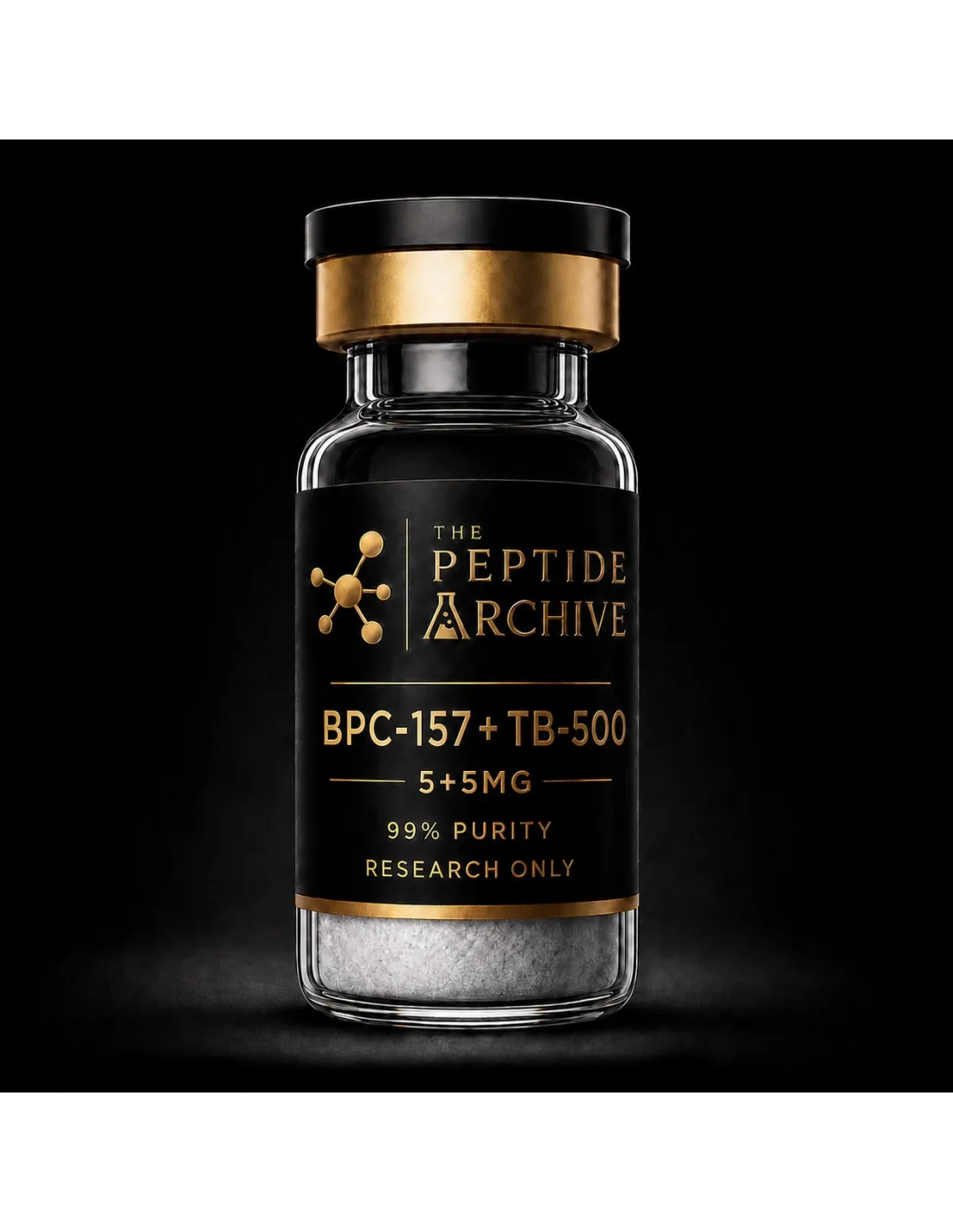
BPC-157 + TB-500
BPC-157 + TB-500 is supplied as a research blend for controlled laboratory and scientific research applications. This dual-peptide blend is commonly investigated across experimental models involving tissue remodelling, cellular migration, actin-binding activity, angiogenesis-associated pathways, peptide-mediated repair mechanisms, and biological response signalling.
At The Peptide Archive, our commitment is to provide researchers with access to high-quality research products supported by independent testing, professional handling procedures, and transparent quality standards. Every batch is selected with a focus on purity, consistency, and laboratory suitability.
Product Information
- Product: BPC-157 + TB-500
- Peptide Type: Synthetic dual-peptide research blend containing BPC-157 and TB-500
- Purity: 99%+
- CAS Number: BPC-157: 137525-51-0; TB-500: 885340-08-9
- Molecular Formula: BPC-157: C62H98N16O22; TB-500: C38H68N10O14
- Molecular Weight: BPC-157: 1419.56 g/mol; TB-500: 889.02 g/mol
- Appearance: White to off-white lyophilised powder unless otherwise stated on batch documentation
- Format: Lyophilised dual-peptide research blend
- Batch Verification: Independently tested and quality verified
- Storage: Store refrigerated or frozen until required for research use
- Research Use Case: BPC-157 + TB-500 is commonly utilised in laboratory research involving peptide-mediated repair pathways, cellular migration models, actin-binding domain studies, tissue remodelling, angiogenesis-associated signalling, extracellular matrix response, and peptide stability investigations within controlled laboratory environments.
Research Overview
BPC-157 is a synthetic pentadecapeptide commonly studied in relation to tissue response, extracellular matrix pathways, angiogenesis-associated signalling, and peptide-mediated biological repair models. TB-500 is a synthetic N-acetylated thymosin beta-4 fragment commonly investigated for actin-binding region activity, cytoskeletal organisation, cellular migration, and tissue remodelling pathways.
As a blend, BPC-157 + TB-500 is frequently selected for controlled laboratory models examining how complementary peptide pathways may be studied together in repair-associated, migration-associated, and tissue-response research environments.
- BPC-157 is commonly studied in tissue response, extracellular matrix, and repair-associated pathway models.
- TB-500 is commonly studied in actin-binding, cytoskeletal organisation, and cellular migration research.
- The blend is used in experimental models examining complementary peptide-mediated biological signalling pathways.
- Research interest includes angiogenesis-associated signalling, tissue remodelling, cellular migration, and peptide stability.
- It is frequently included in controlled investigations involving combined repair-associated peptide models.
Researchers frequently select BPC-157 + TB-500 for controlled experimental models requiring a professionally handled, independently verified research product with transparent quality documentation.
Research Applications
- Dual-peptide tissue remodelling research
- Cellular migration and cytoskeletal pathway investigations
- Actin-binding domain and thymosin beta-4 fragment studies
- Extracellular matrix and angiogenesis-associated pathway research
- Peptide stability and biological signalling investigations
- Laboratory studies involving combined repair-associated peptide models
Quality & Testing
Every batch supplied by The Peptide Archive undergoes independent analytical verification through accredited third-party laboratories. Our quality-first approach prioritises transparency, consistency, and traceability, ensuring researchers receive products supported by objective analytical data rather than supplier documentation alone.
Where available, Certificates of Analysis and batch-specific testing information can be provided upon request. This commitment to independent verification forms part of our wider dedication to maintaining exceptionally high standards across our research catalogue.
Handling & Storage
- Store under suitable cold-chain conditions.
- Protect from direct light, moisture, and excessive heat.
- Reconstitute using appropriate sterile laboratory techniques where applicable.
- Avoid repeated freeze-thaw cycles where possible.
- Handle using suitable laboratory-grade equipment and procedures.
Why Choose The Peptide Archive
- Independent third-party batch testing.
- Transparent quality verification.
- Professionally stored and handled products.
- Fast UK fulfilment.
- Dedicated customer support.
- Research-focused product range.
The Peptide Archive remains committed to supporting the research community through independently verified products, transparent quality standards, and reliable UK-based fulfilment.
Important Notice
This product is supplied strictly for laboratory and scientific research purposes only.
Not intended for human consumption, medical use, veterinary use, diagnostic procedures, therapeutic applications, or household use.